



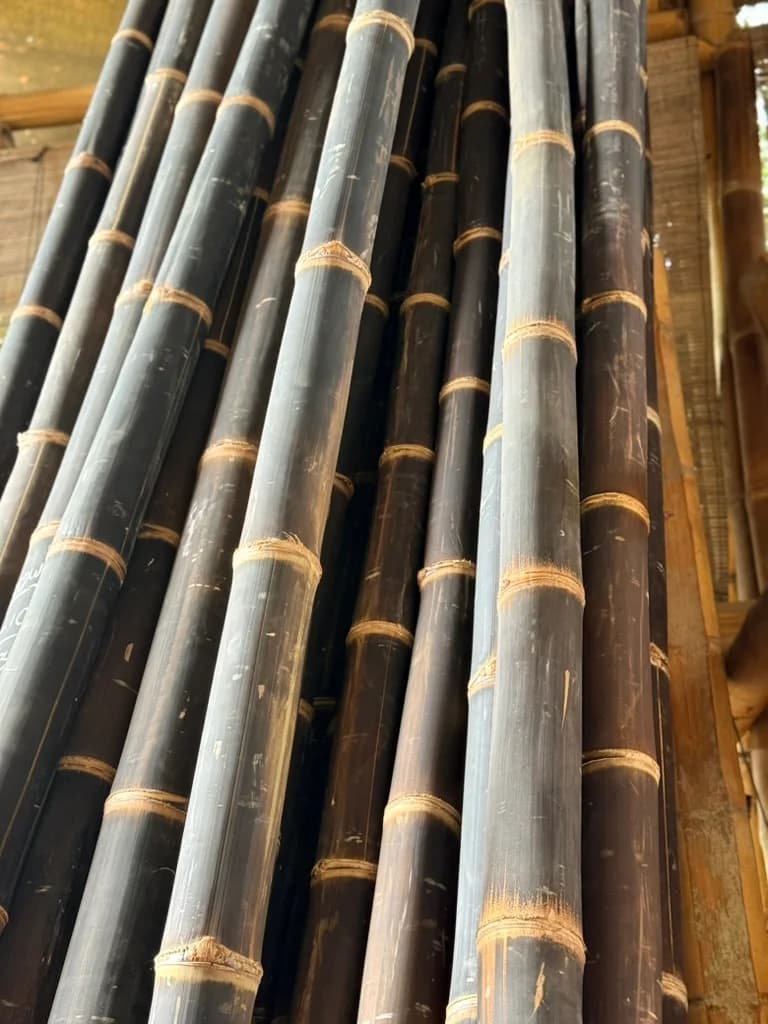
Regenerative Materials
Bamboo is the fastest structural material nature grows, and it banks carbon as it grows. How we source it, treat it, and account for every tonne.
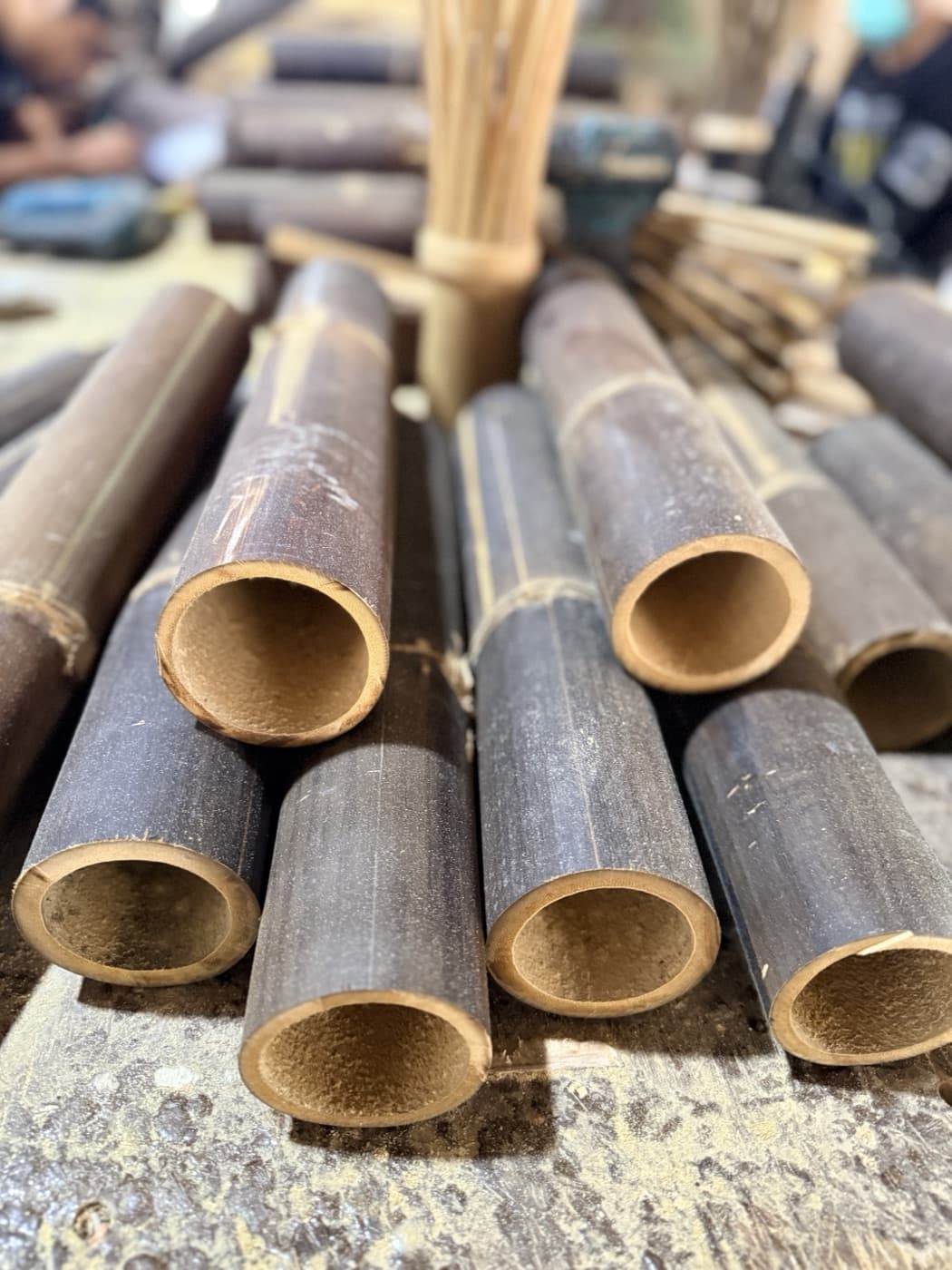
The Material
Grass that thinks it's steel
Bamboo reaches structural maturity in three to five years and regrows from the same root system. A building material you harvest like a crop. Pound for pound it rivals steel in tension and concrete in compression, light enough for a crew to raise by hand.
And because it grows by drinking carbon, a bamboo structure can hold more carbon than its build emits. A claim we back with a life-cycle carbon analysis on every build.
- Engineering basis: ISO 22156:2021 structural design code + the 2025 IStructE bamboo manual
- Treatment: boron-treated against insects and rot before shipment
- Grading: culms selected and graded for diameter, wall thickness, and straightness
- Carbon: life-cycle analysis on every build, figures published per project
At a Glance
How structural bamboo compares
| Structural bamboo | Steel | Timber | |
|---|---|---|---|
| Strength to weight, tension | Rivals steel, pound for pound | The benchmark | Lower |
| Time to harvest | 3 to 5 years, regrows from the same roots | Not renewable | 25 to 80 years |
| Carbon | Sequesters carbon as it grows; figures published per project | High embodied carbon | Sequesters, slower cycle |
| Design code | ISO 22156:2021 + 2025 IStructE manual | Mature codes | Mature codes |
| Raised by hand? | Yes, light enough for a volunteer crew | Crane work | Sometimes |
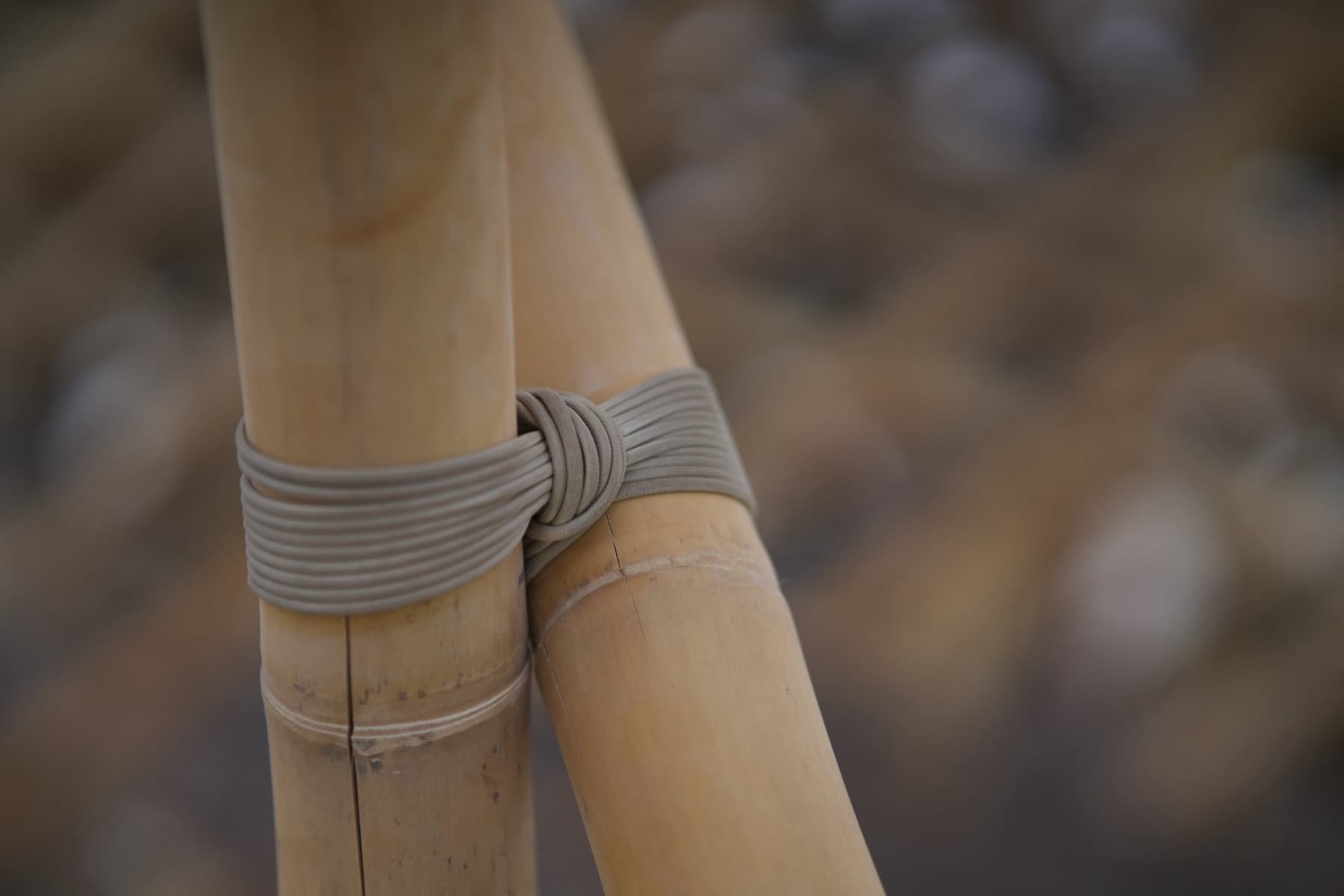
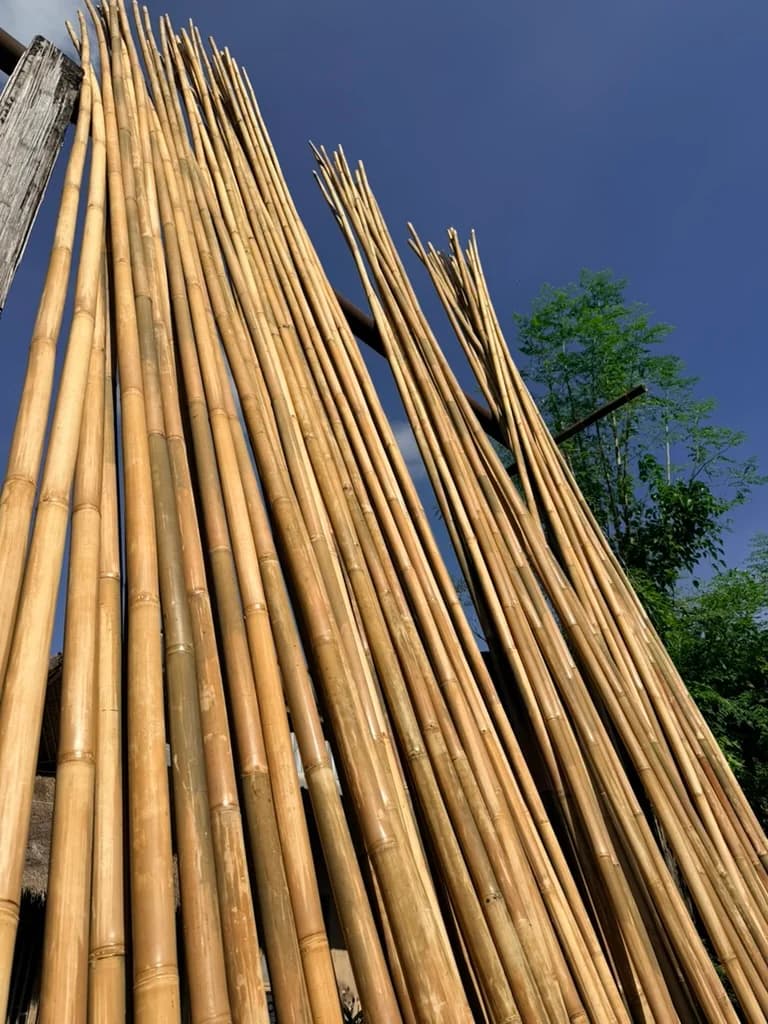
Carbon Analysis · Standard Practice
We measure every build, to the tonne
A life-cycle carbon analysis is standard practice on every Resonance build. The bamboo is weighed from the shipper's packing list, not estimated. Freight is charged per leg on cargo mass. Every fixture is counted, and so is the raise on site. Against all of that we count the carbon held in the poles and in the ground that grew them.
Then we go further: we offset what we spend, and we plant. An open challenge to every artist, camp, and organizer: measure it, offset it, then plant something.
- Method: life-cycle assessment on verified mass, to EN 16449 and ISO 14040/44
- Freight: every leg charged on cargo mass, per the GLEC Framework and ISO 14083
- Counted in full: materials, steel, lights, processing, and the on-site build
- Published: a carbon impact one-pager per project; the full report and calculations on request
- 4.4 t held in the poles, above ground
- 2.5 t held in the ground: roots and soil
- 1.73 t transport, eight freight legs
- 1.68 t materials, steel rings and 150 lights
- 0.25 t processing · 0.15 t on-playa build
- Carbon-negative either way: counting the poles alone, or the carbon held in the ground
- Reused in 2027 and beyond, the carbon stays held and the balance grows with every rebuild
The Resonance Tree, 2026: 2.5 tonnes of single-origin Bali bamboo, weight verified from the packing list. The 6.9 t held is about 17,500 miles of driving, or 115 tree seedlings grown for ten years. See the carbon impact one-pager →
Sourcing
Single-origin bamboo from Indonesia
We import primarily from Indonesia, where we have found the highest-quality materials, manufacturing, and pricing. The Tree's bamboo came from one Bali plantation, hand-cut and sun-dried, and was made into components by master craftspeople there before it shipped.
Poles arrive borate-treated against insects and rot, graded for diameter, wall thickness, and straightness, and cut to length. We handle USDA/APHIS treatment requirements and customs, and every order ships with the paperwork that survives review.
- Single origin, verified mass: one plantation, one packing list
- Treated and graded: borate treatment, graded culms, cut to length
- Compliance handled: USDA/APHIS treatment requirements, permits, and customs
- Documentation: treatment certificates and grading records with every order
Material Questions
What everyone asks about bamboo
Is bamboo really strong enough to build with?
Yes. Full-culm structural bamboo has tensile strength comparable to mild steel by weight and compressive strength in the range of concrete, at a fraction of the mass. It is a fully characterized engineering material with an international design code (ISO 22156:2021) and a 2025 IStructE design manual behind it.
How long does a bamboo structure last?
Untreated bamboo can fail in a few years; properly treated and detailed bamboo lasts decades. Durability comes from two decisions: boron treatment against insects, and design that protects the bamboo from the elements. We make both on every project.
What species do you build with?
Typically Asper (Dendrocalamus asper, known in Bali as Petung), Tali (Gigantochloa apus), and Guadua (Guadua angustifolia). Asper carries the large-diameter structure, Tali the lighter members, splits, and weaves; Guadua is the Latin American structural species we plant and offset with. Each is selected per project for diameter, wall thickness, and the spans your design needs.
Why Bamboo
The fastest structure nature grows
Regenerative by nature
Structurally mature in three to five years, regrowing from the same roots, harvested like a crop, not a forest.
Strength that surprises
Pound for pound, structural bamboo rivals steel in tension and concrete in compression, light enough to raise by hand.
Fast, movable, kind
Up in days, tours between events, down without a trace.
Regeneration
Regeneration means planting
Bamboo is a grass. Cut a culm at maturity and the plant keeps growing from the same root system: a harvest is not a clearing, and a managed grove keeps drawing down carbon year after year. Building with bamboo, sourced well, funds the groves that keep it growing.
We plant, too. Through Guadua Bamboo's Adopt-a-Bamboo program in Colombia, Resonance adopted a stand of Guadua, certified at 20 tonnes of CO₂ drawn down as the grove grows, and we are expanding it: about 40 tonnes over seven years, enough to cover our crew's travel to the playa, while helping reforest the native guadua land where this plant belongs.
And nothing is thrown away. Precise digital and physical modeling and prefabricated components keep waste low, and every pole, ring, and weave of the Tree is designed to be rebuilt: it returns in 2027 and beyond, and its parts become the Resonance Conch.
CO₂ offset, certified
A stand of Guadua bamboo adopted in Colombia through Guadua Bamboo's Adopt-a-Bamboo program. As the grove grows, it draws 20 tons of CO₂ out of the air. Certified.
See the certificate →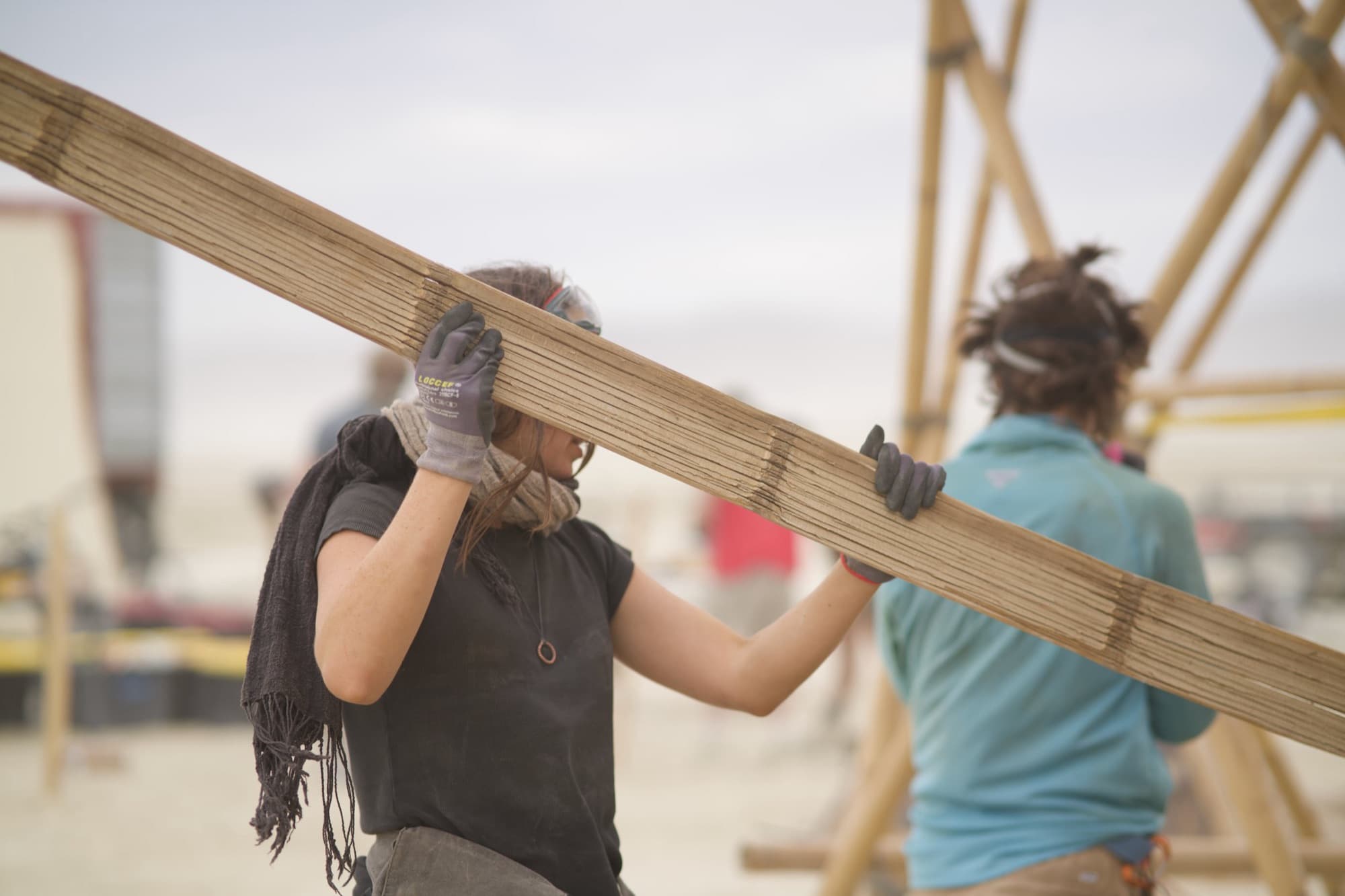
Need poles, or a whole building?
From a bundle of culms to a full design-build commission. Start with what your project needs.